Nymphaea micrantha is a water lily belonging to the genus Nymphaea. It is native to the tropics of West Africa.
Description
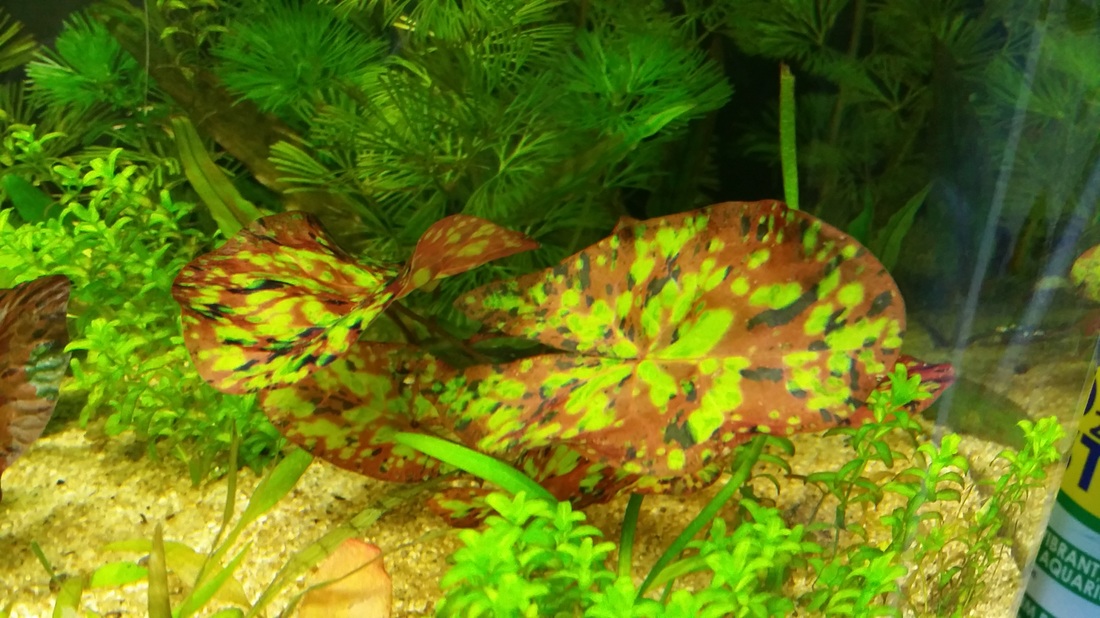
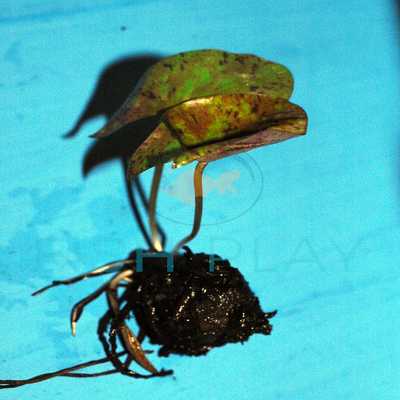
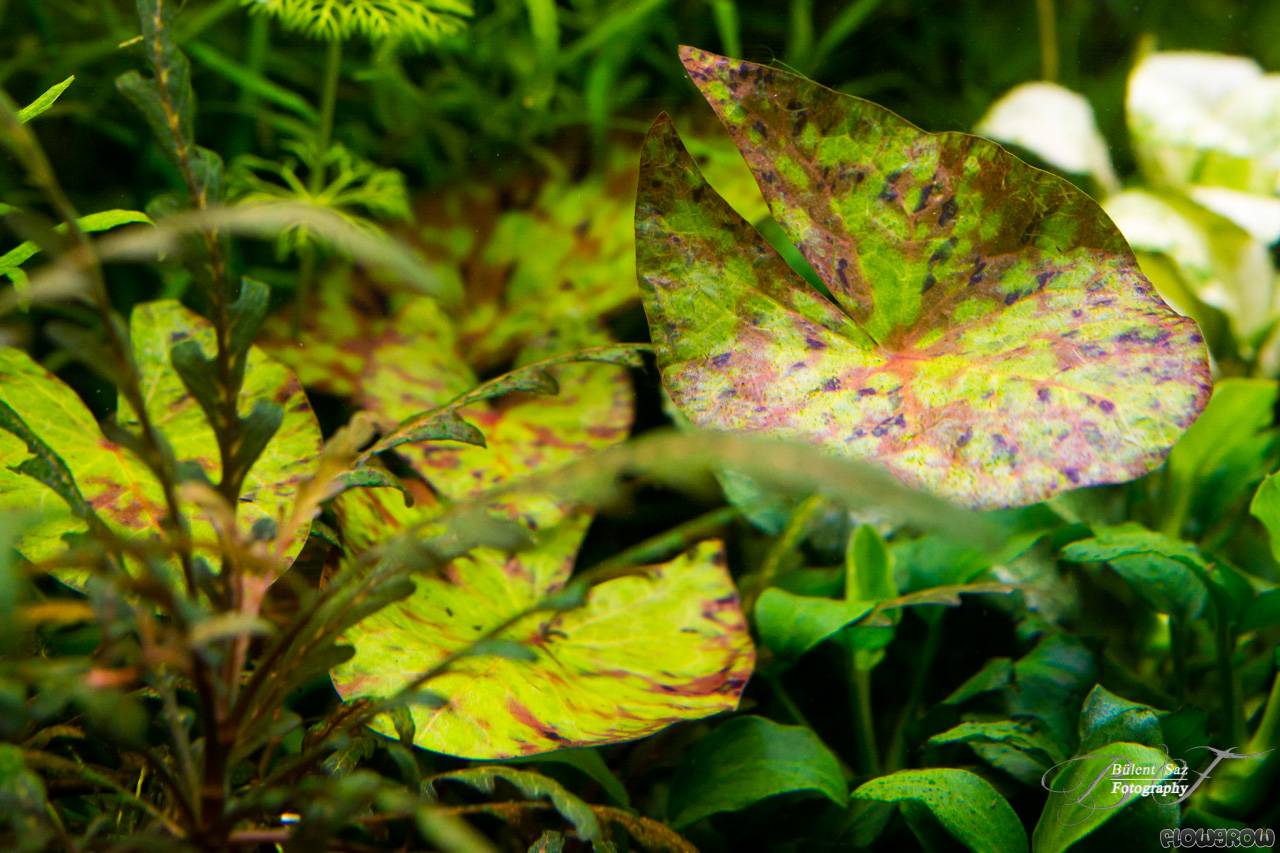
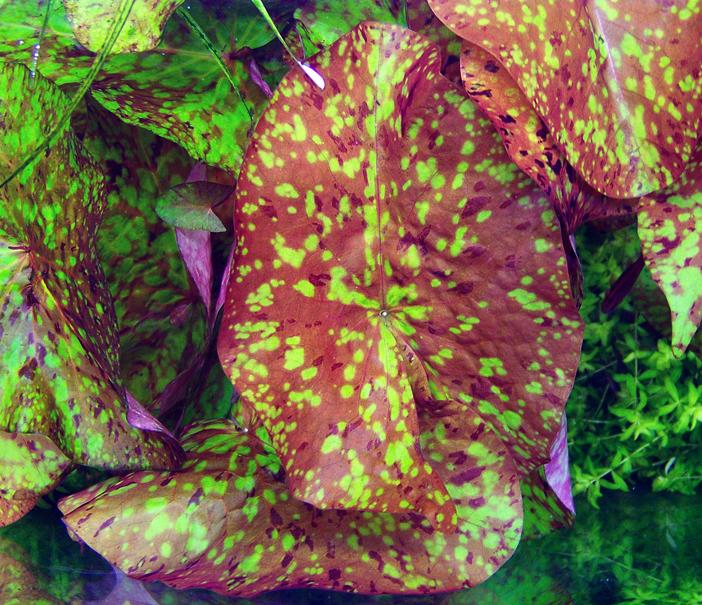
Its leaves are oval or round, 8-12 cm long, with a cluster of bulbils on the top of the leaf stalk. Flowers can reach up to 10 cm in diameter, and appear from approximately September to October. The plant usually grows to a height of 20–80 cm (8–32 inches). It cannot be grown emersed.
Reproduction
Vegetative reproduction
New plantlets develop on the adaxial leaf surface through foliar proliferation. The development of those plantlets is halted, while the leaf is still attached. However, once the leaf is detached the plantlets develop fully. In India, which is outside of this species natural range, it has been shown that Nymphaea micrantha predominantly reproduces asexually. In India it has been shown to lack any amount of genetic diversity.
Cytology
The chromosome count is n = 14. The genome size is 889.98 Mb.
Taxonomy
Publication
It was first described by Jean Baptiste Antoine Guillemin and George Samuel Perrottet in 1831.
Natural hybridisation
Together with Nymphaea nouchali var. caerulea, Nymphaea micrantha forms the natural hybrid Nymphaea × daubenyana native to Chad.
Etymology
The specific epithet micrantha, from the Greek mikros meaning small and anthos meaning flower, means small-flowered.
Uses
Food source
Seeds of Nymphaea lotus and Nymphaea micrantha are eaten in Senegal.
References
External links
- Nymphaea micrantha in West African plants – A Photo Guide.